Lexicons of Literary Terms in African Languages
Are you an expert speaker of an African language and feel frustrated at the dominance of English in global knowledge production about Africa and its varied forms of cultural expression? Do you have a background in linguistics and/or literary and oratory culture in your language of expertise? If so, you may want to consider compiling and publishing a lexicon of terms in your language as part of the ALMEDA project.
What is a lexicon in this context?
Lexicons in the ALMEDA project are comprised of two parts:
- First, the project seeks translations of key terms in its knowledge schema so as to make that schema operable in as many African languages as possible. This is also a way to ensure that we can encode data about African cultural expression in the languages that those cultural or literary texts are written or performed in.
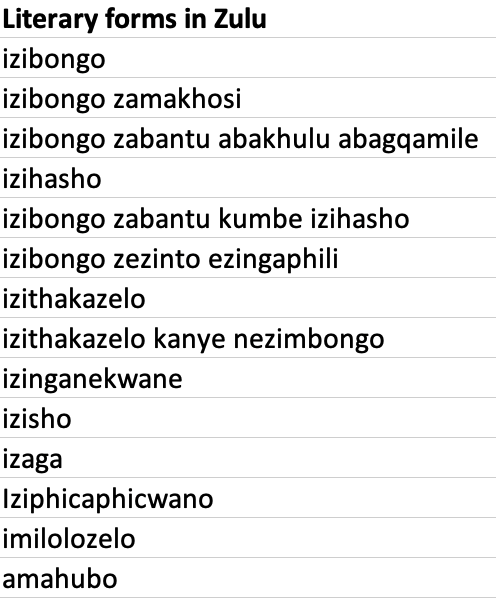
- The second part of a lexicon involves compiling a list of literary or cultural expressive terms that pertain uniquely to that particular language. Most languages have their own variations on terms used to describe certain poetic or story forms, and we want to capture those terms with a high degree of precision so as to integrate these terms correctly into our ontology.
Why we need your help?
The ALMEDA project has language expertise in fourteen African languages, which is not enough for the needs of our multilingual ontology. A lot of the extant published work on lexicon creation in the field of literary and oratory culture is from the early to mid 20th century and was written by European linguists without deep cultural understanding of the forms they were describing. We need dynamic, critical and contemporary lexicons by first language speakers of African languages.
What’s in it for you?
Become part of Open-Science and Data Sharing: In addition to making a significant contribution to knowledge production in your language and in aiding the visibility of literary and expressive works in that language, the ALMEDA project will publish your lexicon on our project space in ZENODO, an open-science repository developed under the European OpenAIRE program and operated by CERN. This cutting-edge repository will make your lexicon visible, accessible, and usable by researchers across the world. The publication will receive a DOI and will be linked to any citing research and cross-referenced in your own articles emerging out of your data collection.
Publish with a prestigious European Commission supported project: As a publication under the auspices of ALMEDA, your publication will also be formally linked to a highly prestigious European Research Council (ERC) funded project. The combination of high visibility and assurance of excellence makes this an attractive publication opportunity for researchers at any stage of their scholarly careers. Publication of datasets is subject to successful evaluation by blind peer-review.
Would you like to know more?
You can see a list of our controlled vocabulary of terms that need translation here. The extent of the list of unique language terms would depend on every individual language.
If you are interested, please be in touch with us (almeda@uu.se) before starting work, since we have a number of language lexicons already underway.