African Literary Metadata
MENU

ALMEDA begins collaboration with FEMRITE, Uganda

The ALMEDA project is proud to be working with the NGO, FEMRITE (https://femrite.org) a Ugandan Women Writers’ Association that has inspired, supported and published African women writers from across the continent. FEMRITE has published numerous anthologies of poetry, short stories and Creative Non-Fiction, as well as novels, autobiographies, translations and magazines. It also hosts writers’ workshops, author evenings, readings, poster poetry exhibitions and many other events. We at ALMEDA look forward to cataloguing the rich body of work that has been enabled by FEMRITE. This collaboration will be part of researcher Erik Falk’s case-study on the ALMEDA project.

Postdoc News: Gloria Ajami Makokha works with the British Institute in Eastern Africa

Read the BIEA’s recent blog on this collaboration.

Read more

New dataset: Two Tone Magazine, Zimbabwe

This dataset covers poems published in Two Tone magazine from its first volume in 1964 to its final issue in September 1982. Two Tone was founded by Phillippa Berlyn and Olive Robertson and was published by the National Arts Foundation of Rhodesia/Zimbabwe and the Department of English at University of Rhodesia/Zimbabwe. An interesting aspect…

Read more

Messy Data, Ephemeral Literatures, and the Future African Archive, Centre of African Studies, University of Copenhagen, 6 May 2026

Ashleigh Harris will present ALMEDA’s work with ‘Messy Data’ at the Centre of African Studies, University of Copenhagen at 15:00 on 6 May 2026. Abstract: A significant portion of African Literature and expressive cultures – from the late 19th century to the present – has been produced as print, audio, video,…
Read more

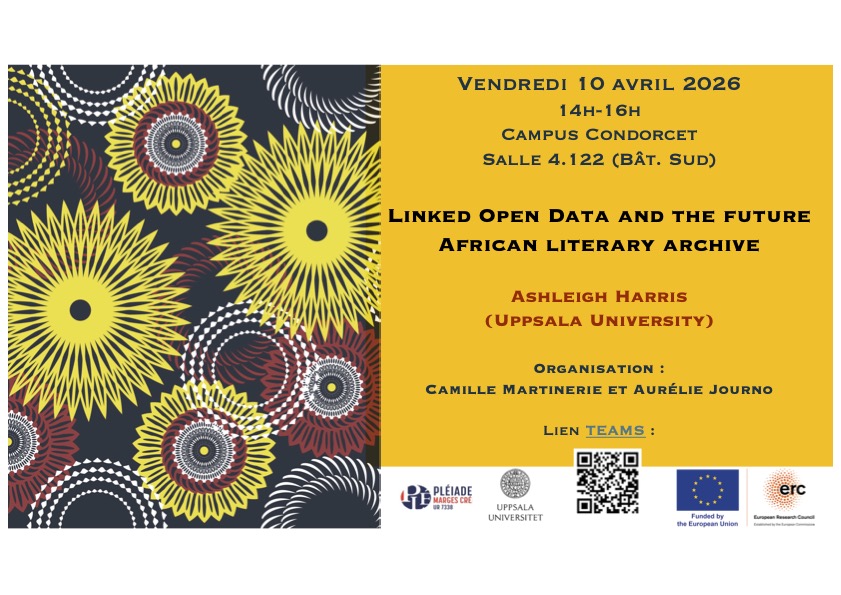
Linked Open Data and the Future of the African Literary Archive, Campus Condorcet, Paris and Online, 10 April 14:00-16:00 CET.

Join us for a talk by Ashleigh Harris on the ways in which the ALMEDA project uses Linked Open Data and the Semantic Web to create sustainable data on African Literature and expressive culture.

Read more